For many homeowners in Milton, winter can feel like a constant challenge for your driveway. Snow, ice, and fluctuating temperatures put asphalt and concrete through a real test. Cracks, potholes, uneven surfaces, these are common issues that appear after months of freeze-thaw cycles.
If you’re wondering whether it’s time to schedule driveway repair in Milton, it helps to understand how your driveway materials behave in cold weather. This guide walks you through the differences between asphalt and concrete, common winter problems, and practical tips to protect your driveway from serious damage.
How Asphalt Driveways Handle Winter
Asphalt is known for its flexibility and relatively low upfront cost, but winter can expose its weaknesses.
Why Asphalt Can Struggle in Winter
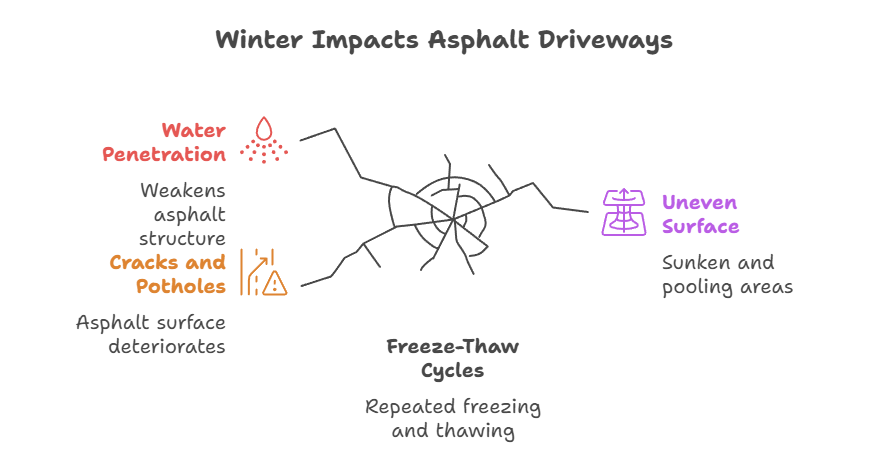
While asphalt’s flexibility allows it to handle minor ground movements, repeated freeze-thaw cycles can lead to cracks and potholes. Road salt and water penetration can further weaken the surface, making small issues snowball into bigger problems if left unchecked.
Signs Your Asphalt Driveway Needs Attention
- Cracks or fissures that are widening
- Potholes forming after snow melts
- Uneven or sunken areas
- Water pooling on the surface
Preventive Measures
- Apply sealant before the first heavy snowfall to reduce water absorption.
- Inspect the driveway for small cracks and patch them before they grow.
- Clear snow carefully using plastic shovels or a snow blower to prevent surface damage.
Recognizing early warning signs allows for asphalt repair in Milton to be scheduled proactively, minimizing post-winter damage.
How Concrete Driveways Handle Winter
Concrete driveways are often praised for their durability, but they’re not impervious to winter conditions.
Common Winter Challenges for Concrete
- Spalling: Flaking or chipping caused by ice, snow, and salt.
- Cracks: Freeze-thaw cycles expand water inside the concrete, creating cracks.
- Surface wear: Pooling water or heavy snow can exacerbate weak spots.
Preventive Measures
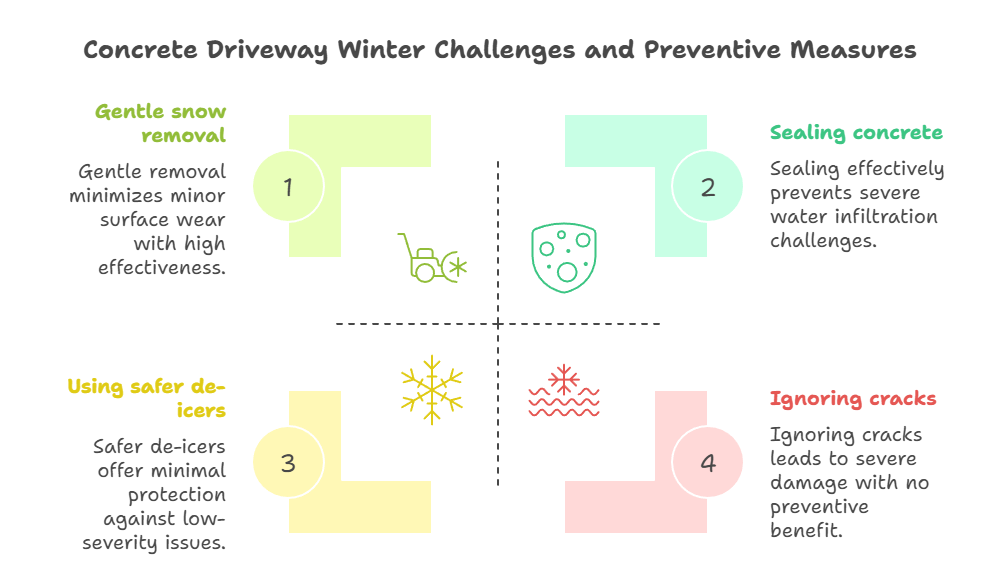
- Seal your concrete driveway before winter to limit water infiltration.
- Remove snow gently and avoid metal shovels that can chip the surface.
- Use safer de-icers like Calcium Chloride or Magnesium Chloride, especially if concrete is air-entrained.
Signs Your Concrete Driveway Needs Repair
- Visible cracks wider than ¼ inch
- Uneven slabs or sinking areas
- Surface flaking or spalling
- Evidence of freeze-thaw damage
Scheduling minor concrete repair in Milton during or immediately after winter can prevent small cracks from turning into costly replacements.
Concrete vs. Asphalt: Which Is Better for Milton Winters?
Choosing the right driveway material is often about balancing durability, maintenance, and cost.
Durability
- Asphalt is flexible but susceptible to potholes and frost heave.
- Concrete is stronger but more sensitive to de-icers and freeze–thaw damage.
Maintenance Requirements
- Asphalt: Regular sealing and patching of cracks are necessary.
- Concrete: Sealing, crack repair, and monitoring surface wear help protect it through winter.
Cost Considerations
- Asphalt: Lower initial cost but may require more frequent repairs.
- Concrete: Higher upfront investment, but longer-term durability often justifies the cost.
Concrete vs. Asphalt: At a Glance
Understanding the key differences helps homeowners choose the best preventive and repair strategies:
| Feature | Asphalt | Concrete |
| Flexibility | Good for minor ground shifts | Less flexible, more prone to cracking |
| Winter Vulnerability | Potholes, frost heave, cracking | Freeze-thaw damage, spalling, cracks |
| Maintenance | Sealant, patching, snow removal | Sealing, crack repair, careful snow removal |
| Cost | Lower upfront, more frequent repairs | Higher upfront, long-term durability |
Proper preparation before winter and timely repair after thaw ensures driveways last longer, whether asphalt or concrete.
Winter Maintenance Tips for Driveways
Keeping your driveway in good condition through the winter can make a big difference in longevity.
1. Snow Removal
Use plastic shovels or snow blowers carefully to avoid damaging asphalt or concrete surfaces. Avoid metal shovels that can chip concrete or tear asphalt.
2. Choose the Right De-Icers
Avoid harsh salts like Sodium Chloride, which can accelerate cracking and surface damage. Safer alternatives include Calcium Chloride or Magnesium Chloride, which are gentler on both concrete and asphalt, especially if your concrete is properly air-entrained.
3. Seal Your Driveway
Sealing your driveway before winter helps prevent water from seeping into cracks, reducing freeze–thaw damage. Regular inspections allow you to catch small issues early and address them before they become larger, costly repairs.
4. Local Considerations
Milton’s clay-heavy soil can worsen frost heave, making proper base preparation and timely crack repair even more critical. Local contractors understand these conditions and can advise on preventive care and repairs.
When to Schedule Driveway Repair in Milton
You should look for:
- Cracks wider than ¼ inch
- Potholes or sunken sections
- Uneven or flaking surfaces
- Pooling water or poor drainage
- Signs of salt or freeze–thaw damage
Preventive care during winter plus timely post-winter repair ensures your driveway remains safe and durable all year round.
FAQ
Q1. How do I know if my driveway needs repair?
A: Cracks, potholes, uneven slabs, surface flaking, or pooling water are signs that you may need driveway repair in Milton. Early action can prevent bigger problems.
Q2. Can concrete survive Canadian winters?
A: Yes, with proper maintenance and sealing. Freeze-thaw cycles and salt can cause damage, but timely repairs help preserve the driveway.
Q3. Should I repair or replace my asphalt driveway?
A: Small cracks or potholes can often be patched, but widespread damage or repeated issues may require full replacement.
Q4. How can I prevent winter driveway damage?
A: Remove snow carefully, use safe de-icers, seal your driveway before winter, and inspect regularly for minor issues.
Q5. Why choose local concrete contractors in Milton?
A: Experienced local contractors understand the challenges of Milton winters and can ensure repairs are done correctly, helping your driveway last longer.
Conclusion
Winter in Milton can be harsh on driveways, but understanding how asphalt and concrete behave in cold conditions helps homeowners make informed decisions. Early maintenance, timely repairs, and preventive measures like sealing and safe snow removal can save time, money, and stress.
If your driveway shows signs of damage, arranging driveway repair in Milton sooner rather than later ensures your asphalt or concrete driveway remains safe, functional, and ready for the season ahead.
Don’t wait for a small crack to become a major replacement, contact Concrete base at 416-606-2507 today for a thorough assessment. Our team of professional can handle both concrete and asphalt repair or replacement. Visit our site for more information.